


This is a contributed post by Erica Hornthal, LCPC, BC-DMT, author of Body Aware and The Movement Therapy Deck.
Our tweens and teens are facing a mental health crisis. With the demands of adolescence, uncertainty of the world, lingering social challenges from the pandemic, as well as the implications of social media and smartphones, our kids need all the support they can get when it comes to coping with their physical health and mental wellbeing.
Jonathan Haidt, American social psychologist and author of the #1 New York Times Bestselling book, The Anxious Generation: How the Great Rewiring of Childhood is Causing an Epidemic of Mental Illness identifies the decline of play-based childhood and the rise of phone-based childhood. This is changing the way our children learn, create social connections, and interact with their peers and the world around them. Many parents have seen firsthand the impact on their own child’s mental health and quickly reach out for support from mental health professionals and therapists.
The trouble is that this age group doesn’t necessarily want to talk to a stranger (therapist) about it, not to mention their own parents. Talking out loud about symptoms of depression, anxiety disorders, or any other mental health issues is just one piece of the puzzle though. Words alone make up less than 10% of our communication. Non-verbal communication including tone and body language account for 90%. So how can we support our kids in identifying and managing their emotional health? We can encourage them to MOVE.
Kids Are Already Moving, So Capitalize On That
There are a lot of things we might need to convince our young people to do, but movement shouldn’t be one of them. The simple reason is because they are already doing it. Author, somatic educator and dance/movement therapist, Dr. Christine Caldwell, says “Movement is life. If we are not moving we are not living.” This doesn’t just apply to physical activity or exercise, but all of the micromovements we engage in many of which are involuntary. For example, breathing. Thankfully most of us don’t have to think about breathing, but that doesn’t mean we are doing it effectively or that it is supporting our own regulation and ease.
While it may not meet your current definition or expectation of movement, movement in its purest form is a shift or change in posture, position, or perspective. Research shows that the smallest movement in our posture or body has influence over what we think and how we feel. Movement is the medicine we all need to move through life’s challenges and support not just our physical but emotional health too.
Related: These 5 Unhealthy Eating Habits Can Contribute to Your Teen’s Poor Mental Health
5 Ways Movement Can Help Teens’ Mental Health
Parents of teens and tweens know that just because something is good for them doesn’t mean they’re going to do it. Here are 5 ways to encourage our kids to move for their mental health.
1. Model it for them.
We as parents need to be role models, making space for feelings in our own lives in order to witness and validate them in our children. Finding ways to move intense emotions throughout the day is necessary to release stress and overwhelming thoughts. This can look like taking a walk outside, slowing down, engaging in unstructured time without technology, mindful exercises like yoga or dance, and quality time with family or friends. Make healthy moving a habit and your kids will do the same.
2. Do it together.
Invite your child to move with you or look for opportunities to join them in their favorite movement activities and behaviors. Keep in mind that everything is movement. This might be creating art, coloring, playing music or singing, cooking, and even reading.
3. There’s an APP for that.
While we don’t want to rely solely on technology, it can be a way to introduce “new” concepts that are more based in play and experience. Apps that encourage somatic or “body” practices that alleviate stress can help create a foundation for the movement we want to encourage them to be doing away from their screens. Examples are Movement Genius co-founded by Alyson Stone, SomaShare, and Fortify Wellness.
4. Find support through social media.
If teenagers are going to engage in social media, we can encourage them to engage with it in a physically and emotionally appropriate manner. Parents can do some research on their own or with their kids to identify accounts that support mental health through movement and body awareness. Let me be clear that these aren’t accounts that focus on body image or aesthetics, but rather, are resources on how body movement can support emotional health. This becomes more about teaching our kids to identify what movement they need to support self-esteem, confidence, and safety, while cultivating a healthy relationship with their own needs.
Related: The Ultimate Parent Resource Guide For Teen Tech Use, Social Media and Safety
5. Encourage creativity and play.
Don’t assume the physical activities they are already doing are enough. Many of the dance teams, competitive sports, and school clubs can contribute to the pressure and stress not alleviate it. Even though our children may be older and seem beyond the play-based years, research shows that creativity increases as we get older but that we have to exercise it just like a muscle in order to reap the benefits. Creativity, imagination, and play support critical thinking, decision making, and teach our kids to move with the world around them.
Lastly, we can encourage our kids to identify and expand upon the movements they are already doing. Finding joyful ways of connecting to our bodies supports moving through the challenges of adolescence. Embrace all the movement at your kids disposal, supporting individual preferences and differences, and holding space for their own lived experience as it emerges through their nonverbal communication. Just because your kids aren’t talking doesn’t mean they aren’t telling you something.
Looking for additional resources to get your teens moving and boosting their mental health?
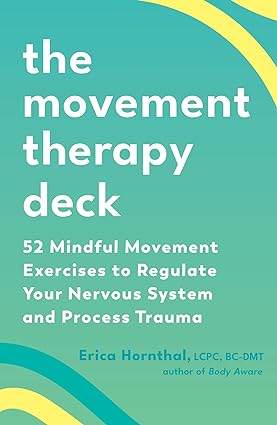
We recommend The Movement Therapy Deck: 52 Mindful Movement Exercises to Regulate Your Nervous System and Process Trauma by Erica Hornthal. The Movement Therapy Deck includes 52 embodied practices to relieve stress, heal from trauma, and find emotional balance. Along with an accompanying 64-page booklet, you’ll receive a full of set of trauma-informed mindful movement cards that feature a simple exercise to help your teen reconnect with their body, release tension, and find grounding amid a destabilizing world—at their own pace, and in their own time.
Parenting teens and tweens is a tough job, but you’re not alone. These posts might help:
The Best Documentaries To Watch With Your Teens and Tweens
9 Ways Parents Can Help Their Child Build Executive Function in Middle School
Parenthood During the Teen Years Is Difficult If You Are an Empath
This Is Why Teen Girls Are So Mean to Their Mothers
*This post may contain affiliate links where we earn a small commission for purchases made from our site.





Very well presented article and very timely. All of Ms. Hornthal’s are terrific!