

The following is a contributed post by Richard Marriott, author of “The Invisible Trap: A Parent’s Guide to Teen Vaping.”
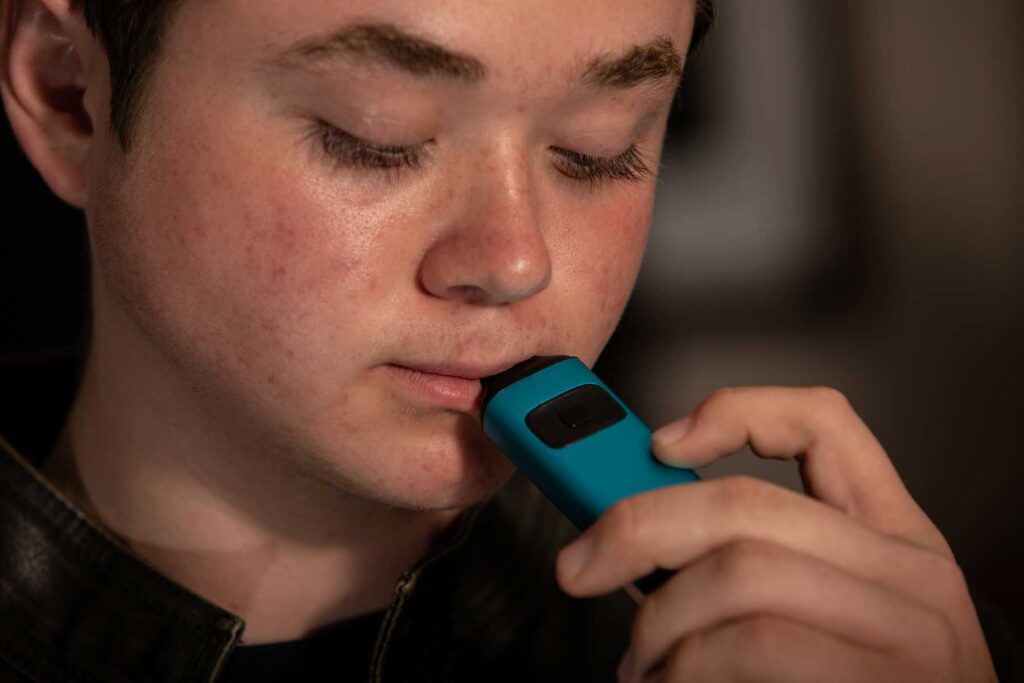
Finding an e-cigarette hidden under a mattress, inside a pencil pouch, or tucked behind a desk drawer is a moment that catches most parents completely off guard.
Your initial impulse might be to react with immediate anger, issue an ultimatum, or launch into a lecture about the long-term dangers of smoking. But reacting in high emotion often causes teenagers to shut down, hide the behavior better, or dig in defensively.
Modern vaping is engineered differently than traditional cigarettes. Today’s disposable e-cigarettes utilize high-potency nicotine salts—formulated with benzoic acid to neutralize the harsh chemical throat hit. This chemical modification allows a 13- or 14-year-old to inhale industrial-grade doses of nicotine deep into their lungs without coughing or feeling an immediate warning. Coupled with stealth designs resembling highlighters, USB drives, or ballpoint pens, many teens find themselves deep in a daily dopamine loop before they even realize they are dependent.
If you just discovered a vape in your child’s room, here are 3 immediate, action-oriented steps to handle the situation effectively.
You may also like to read: It’s Not “Just Pot” — Why We Need to Be Concerned About Today’s Marijuana
3 Steps to Take if You Find a Vape in Your Teen’s Room
1. Secure the device without conducting an accusatory search.
When you discover a vape, hold onto the device calmly. Do not tear through their entire bedroom, backpack, or personal belongings looking for a “cache.” Conducting a chaotic raid shifts the focus away from their safety and turns the moment into a battle over privacy and control.
Treat the device as evidence, not a weapon: Place the device in a safe spot out of sight. Having the physical object allows you to address reality directly without relying on speculation.
Identify what they were actually using: Look closely at the device. Is it a standard disposable vape, a pod system, or a device disguised as a common school supply (like a stylus or highlighter)? Understanding the specific technology helps you grasp the potency level they were consuming.
Take a breath before initiating the conversation: Wait until you are calm, centered, and out of the “fight-or-flight” stress response. Entering the conversation while furious practically guarantees your teen will build an emotional brick wall.
2. Pivot from accusation to curiosity. (Use a de-escalation script).
Blasting your teen with phrases like “How could you do this?” or “Do you have any idea what this does to your lungs?” forces them into a defensive posture where they lie or minimize. Instead, approach the discussion as an investigative, team effort to understand what is happening.
Swap high-conflict accusations with specific, curious questions:
Instead of: “You’re grounded! Who gave this to you?”
Try: “I found this on your nightstand today. I’m not here to yell at you, but I am concerned about your health. Help me understand how long this has been part of your daily routine.”
Focus on gathering facts rather than demanding immediate confessions. Ask specific questions about their environment:
- ”Are you feeling stressed at school or around peers, and using this to cope?”
- “Do kids use these in the middle of class or in the restrooms at school?”
- ”How does your body feel when you don’t have access to it for a few hours?”
By framing the issue around their well-being rather than their disobedience, you make it safe for them to speak honestly about the chemical grip they may be experiencing.
You might also like to read: Teens and Vaping—How to Respond, Talk Through It, and Get Them to Stop
3. Address the chemical reality and build an immediate exit plan.
Many teenagers genuinely believe that e-cigarettes are simply “harmless water vapor” mixed with candy flavorings. They measure medical danger on a 40-year horizon—assuming lung damage only happens to elderly smokers.
However, modern vaping can trigger rapid, acute biological reactions. Continuous exposure to heated aerosol containing propylene glycol, vegetable glycerin, and heavy metals paralyzes the microscopic, hair-like cilia in the lungs responsible for sweeping out infections and fluid. In severe cases, active teenage vapers and varsity athletes have experienced sudden respiratory collapse or chemical pneumonitis in very short timeframes.
Once the initial conversation is open, transition directly into a practical support plan:
- Acknowledge the withdrawal curve: High-potency nicotine salts create rapid brain absorption. Explain to your teen that quitting isn’t just a matter of “willpower”—their brain will experience physical irritability, cravings, and headaches for the first 72 hours.
- Replace the physical trigger: If they hit their vape during late-night studying or when feeling anxious, identify alternative physical substitutes (chewing gum, stress balls, or deep-breathing exercises).
- Connect with support resources: Utilize text-based youth cessation programs (such as This Is Quitting by texting DITCHVAPE to 88709) which provide free, anonymous daily support tailored specifically for adolescents quitting e-cigarettes.
Finding a vape in your teen’s room is alarming, but it is also an opportunity to intervene before a daily habit turns into years of addiction. By staying calm, asking targeted questions, and offering clear support, you can help your child step out of the trap safely.
For a complete visual walkthrough of modern stealth vaping technology and conversation toolkits for families, grab a copy of “The Invisible Trap: A Parent’s Guide to Teen Vaping.”
Parenting teens and tweens is a tough job, but you’re not alone. These posts might help:
How to Cope with the Sting of Rejection from Your Teen
Teen Boys Need These 9 Simple Things to Get Through These Tough Years
I Felt Like a Failure When My Daughter Struggled With Depression
*This post may contain affiliate links where we earn a small commission for purchases made from our site.