
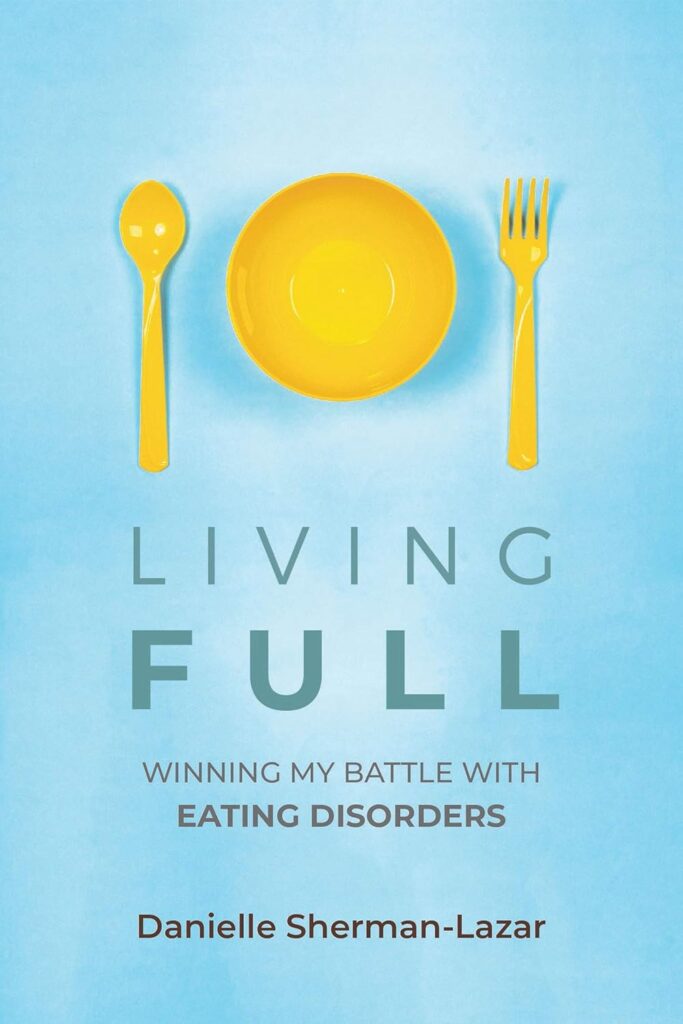
This is a contributed post by Danielle Sherman-Lazar, author of Living FULL: Winning My Battle with Eating Disorders

My mom came into my house the other day. After meeting my girl’s excited jumps and shouts of “Mimi!” with warm hugs and kisses, she approached me, softly touching my arm, and whispered, “I heard on the news that eating disorders are on the rise.”
The little hairs on my arm rose.
I looked up at my four daughters eating pizza at the kitchen table.
“Mom, can I have another slice, please?” My seven-year-old, the oldest of my daughters, asked, tomato sauce dripping from her chin.
“Yes, Ma’am, liking your manners,” I smiled, serving her another piece. I will always be happy to get her more.
That news broke my heart. It doesn’t surprise me, but hearing it, made it real.
What does having an eating disorder look like?
Why does this affect me so much?
Ten years back, days before my 26th birthday, I opened my eyes to my mom standing at my bedside. I was wearing nothing but a thin white gown.
My mom caught my gaze, “You’re in the hospital. You had a seizure. You fell off the kitchen chair and began convulsing. I had to pin you down. Somehow, I called 911. You were speaking gibberish. It was so scary.” She stroked my hair as she spoke.
This was when I hit rock bottom from my two-decade struggle with eating disorder behaviors. At that point, I had lost nearly all my life to it—I missed out on so many experiences, absorbed in the endless cycle.
And my biggest fear is that my daughters will one day be caught in the same web.
That they’d waste hours looking in the mirror, poking and prodding at the skin on their stomachs, never feeling enough, and let a number on the scale dictate their lives.
Related: Dear Daughter, Never Let the World Tell You That You Aren’t Enough
We’ve come a long way with the body positivity movement and how people are much more open about their mental health. But in a culture where I hear more about Ozempic than intuitive eating, and if you lose weight, you’re complimented, I’m afraid for young girls.
Five things parents should know about eating disorders
So, from a survivor and mother, this is what parents of young girls need to know.
1). Eating disorders are not one size fits all.
Your child doesn’t have to be thin to have an eating disorder. There’s not one “look.”
When I struggled with bulimia in my late teens, I looked “healthy” but was constantly binging and purging and very sick. When I struggled with anorexia, I was obviously emaciated and ill—but in both circumstances, I was equally sick and needed help.
2). Don’t let your children diet.
Don’t dismiss dieting as your child just trying to lose a couple of pounds, and not a big deal.
Dieting is how eating disorders start.
And it can become serious quickly. Eating disorders aren’t a choice. People with them aren’t consciously deciding to treat their bodies like that. They are mentally and physically unwell and need help. All because they tried dieting.
3). Early intervention is vital.
Don’t wait for it to get worse. The more time you spend waiting, the more entrenched the behaviors will become, whether starving, binging, or purging. We must be proactive in getting our children to seek recovery.
4). Eating disorders are about more than body size.
They are a coping mechanism. I believe mine evolved to cope with the turmoil of my emotions. Being sent to sleepaway camp the summer going into third grade sent my anxiety into high gear, and limiting my food became a comfort.
It was a way to control something when everything felt out of control. It helped me deal with all the pressure I put on myself to be “perfect.” Because I was the girl who did everything I was “supposed to do.”
In school, I studied harder than anyone else, always getting straight A’s. I went out of my way not to make my parents mad. I was the “easy” child, the people pleaser who said yes to everything—and it’s unrealistic to be this person all the time.
Related: 9 Practical Ways Parents Can Help Teens Deal With Perfectionism
5). You, Mom, are your children’s most significant role model.
If you speak about the dread of bikini season, so will your child.
If you watch what you eat, so will your child.
If you only compliment appearances, they’ll think that’s what’s important.
So, we must focus on what their bodies can do, not their physical appearance.
Because they are so much more than their bodies, hair, and “pretty face.” Compliment them on who they are–the kind, smart, funny humans you love more than anything.
Our kids–especially tweens and teens–are getting messages from the media that their worth is connected to their looks.
We need to make sure we’re counteracting that. Also, sharing our experiences never hurts, so they can come to us with theirs.
Tweens and teens will protect their eating disorders like it’s their babies. They will hide it. They will lie about it. They will scream at us to defend it.
But it’s not them. It’s their illness. Remember that.
If our child has an eating disorder, it’s not our fault, but we can help them recover. Recovery is hard but always possible—and all our children are worth the fight.
For great resources for your struggling child, contact the NEDA Helpline: https://www.nationaleatingdisorders.org/help-support/contact-helpline
Editor’s note:
What should you know about eating disorders as a parent of teenagers?
Eating disorders are more common than many parents realize.
In fact, one in seven men and one in five women experience an eating disorder by age 40, and in 95% of those cases, the disorder begins before age 25.
The most common eating disorders in children and teens include:
- Anorexia nervosa is an eating disorder characterized by an extreme fear of gaining weight. This disease often causes people to see themselves as overweight when they are at a healthy weight, and even when they are significantly underweight. There are two forms of anorexia nervosa: Restrictive is when people greatly limit what and how much they eat to control their weight. Binge-purge is when paeople limit what and how much they eat, but also binge and purge, which means eating a large amount at once and trying to get rid of the extra calories through vomiting, laxatives, diuretics, or excessive exercise.
- Bulimia nervosa involves binging and purging without limiting what and how much a person eats.
- Binge-eating disorder is when people binge eat but don’t purge or restrict. This is actually the most common eating disorder in the United States.
- Avoidant/restrictive food intake disorder (ARFID) is a newly recognized eating disorder and the most common among children. The person limits the amount or type of food they eat, but not because they are worried about their weight. This is more than just “picky eating” and can lead to malnutrition. Kids with ARFID are more likely to have an anxiety disorder, autism spectrum disorder, or have problems in the home.
This is a contributed post by Danielle Sherman-Lazar, author of Living FULL: Winning My Battle with Eating Disorders
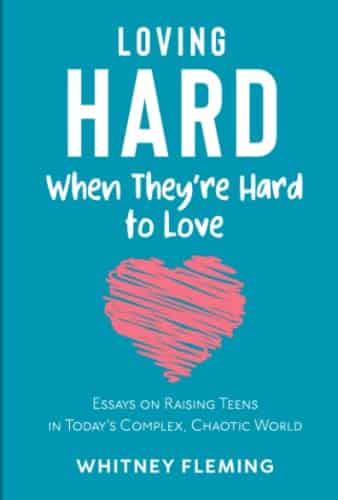
Are you in the thick of raising your tweens and teens? You may like this book by Whitney Fleming, the co-owner of Parenting Teens & Tweens: Loving Hard When They’re Hard to Love: Essays about Raising Teens in Today’s Complex, Chaotic World.
Raising teens and tweens is hard, but you don’t have to do it alone. Here are some other posts you may find helpful:
This Simple Analogy Can Help When Your Teen Doesn’t Feel “Good Enough”
Dear Daughter: You Are More Than a People Pleaser
How To Make Sure Your Teen Is Defining Their Worth Using The Right Measures
Teen Boy Body Issues Are A Thing, Here’s How To Help
* This post contains affiliate links where we earn a small commission for sales made from our website.