

The following is a contributed post from Mitch Weisburgh, author of MindShifting: Stop Your Brain from Sabotaging Your Happiness.
It’s testing season. Do you feel like you are walking on eggshells?
A concerned question turns into a full blown battle. A reasoned suggestion results in open defiance. Your obviously correct instruction becomes a battle of wills.
What’s wrong with these kids? Can’t they just learn from our wisdom and experience?
How do you think your child feels?
Testing season brings a familiar pattern in many households. Parents start checking in more. They ask about study plans. They rearrange schedules. They offer encouragement that sounds a lot like pressure. And without meaning to, they make test anxiety worse.
Let’s examine what’s happening in our and our kids’ brains and then apply those concepts to five workable strategies.

Three Parts of the Teenage Brain
While the brain is incredibly complex, understanding this simplified “MindShifting” model can help you navigate difficult parenting moments.
1. The Survival Brain (Limbic System)
This is our fast, automatic protector. In just hundredths of a second, it subconsciously decides if a situation is safe or dangerous. There is no nuance or reasoning—it simply reacts.
2. The Resourceful Brain (Prefrontal Cortex)
This is the logical “thinking” or “sage” brain that reasons, creates, and makes good choices. However, it takes two to three seconds to activate. If the survival brain senses a threat, stress hormones immediately shut down the resourceful brain. A child, or any human being, in this “fight, flight, or freeze” state literally cannot listen, follow instructions, or think critically.
3. Mirror Neurons
Humans are wired to subconsciously pick up on the emotions and attitudes of those around us. If a parent delivers a harsh demand, the child’s mirror neurons sense the judgment or attack. The child’s limbic system then interprets that judgment as a threat, triggering a defensive “fight” response. This defiance then triggers the parent’s mirror neurons and limbic system, rapidly escalating the interaction into a power struggle.
The Takeaway: For your child to listen to your advice or follow instructions, their survival brain must be calm so their resourceful brain has the space to stay online. By managing your own reactions, their mirror neurons will sense safety rather than an attack, preventing their limbic system from hijacking the conversation.
You might also like to read: Is It More Than Just Normal Teen Anxiety? When to Seek Outside Advice
What this Means for Parents of Teens with Test Anxiety
It’s biology, not willful resistance, nor are these fights inevitable. Our children are not capable of taking in what we tell them if they are in survivor mode.
When our children are in fight/flight mirror neurons drive each of us to battle each other.
If we can be aware of our emotional reaction, we can calm ourselves and access our own resourcefulness.
When we maintain calm, the mirror neurons of our kids start compelling them to calm down as well.
5 Ways Parents Can Help Their Teen
Here are five tips to facilitate regulating our own emotions and remaining calm for our kids.
1. Notice when you are reacting, not responding.
Reacting is from your survival brain.
Perhaps you are reacting without having to consciously think. You are likely in a limbic autopilot if your interactions happen reflexively and you do not have to put any cognitive effort into what you are doing.
For example, a parent might fall into an automatic, unthinking conversational loop with their teenager—asking “How was your day?” and getting “Okay” as a response—without realizing that both of them are just blindly following an unproductive script.
When you feel absolute certainty that there is only one “right” way to respond and that any other response is wrong, you are probably in a limbic survival mode.
For instance, if a child makes a mistake or does something frustrating, your limbic system might make you feel that you have no choice but to get angry, issue an ultimatum, or deliver a lecture, which prevents your resourceful brain from exploring better, alternative ways to handle the situation.
A quick way to check: pause for 30 seconds. Take one slow breath and ask yourself, “Am I trying to help my child right now, or am I trying to manage my own anxiety?” That honest answer changes what you say next. If it is your anxiety talking, the most helpful thing you can do is step back and let the moment pass before you say anything.
2. Stop giving advice when your child is overwhelmed.
If your child is in fight/flight mode, they are not ready to receive any input. At this point, your goal needs to be to establish connection and be empathetic.
Instead of offering solutions, try lowering the temperature first. Say something like “That sounds really stressful” or “What part feels the hardest right now?” These responses tell your child’s brain that it is safe to come out of defense mode. Once the stress drops, they can actually think again. Then, if they want your help, they will ask for it.
You might also like to read: Tips and Skills that Will Make a Teen’s Anxiety Less Powerful in their Lives
3. Separate the test from your child’s identity.
If you are sure that the test indicates some deficiency in your child, they will pick up on that and they will become defensive. Kids who feel like they are being evaluated by their parents during testing season carry a double burden. They are not just taking a test. They are performing for the people whose opinion matters most.
If you catch yourself thinking about what a test result means for your child’s trajectory, notice that thought and let it go. Your child is not a test score. Their brain works better when they believe that too.
4. Create calm before the test, not just a study plan.
Here are some tips from teachers who took MindShifting classes.
- Change the Environment: When a student began crying out of frustration during a final exam, a teacher took her for a walk to get a snack and a drink so she could start fresh.
- Build Confidence: One participant helped her daughter practice the phrase “I can pass this test” and had her list past achievements to build her confidence and motivation before the exam.
- Shift from Fear to Focus: A language teacher helped students see the “butterflies” they felt before an exam as a sign that their brains were “powering up” to perform, which successfully changed the energy from fear to focus.
5. Use the 30-Second Conflict De-Escalator Guide.
I’ve put together a free guide on de-escalating conflicts, which includes three phases and nine phrases. You can download it at (I’ll have to get you the URL)
Testing season is hard for families. But the most useful thing a parent can do has nothing to do with flashcards or practice tests. It is about recognizing when your own stress is adding to the pressure your child already feels, and choosing to interrupt that pattern. You will not get it right every time. That is fine. Just notice it and try something different.
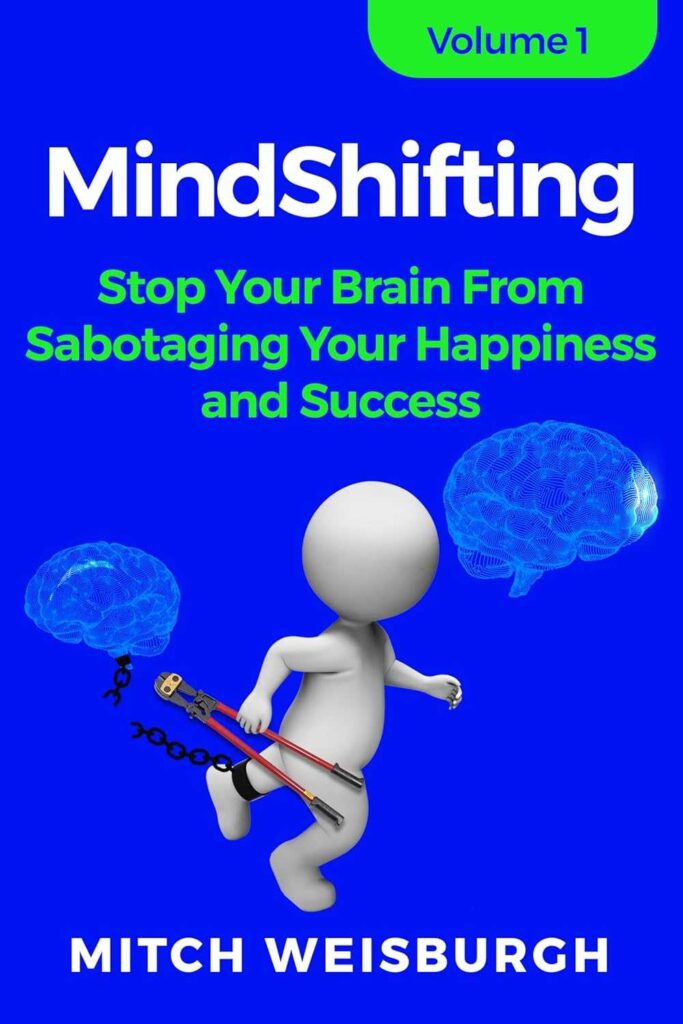
Check out Mitch Weisburgh’s new book, Mindshifting: Stop Your Brain from Sabotaging Your Happiness and Success, on Amazon.
Raising teens and tweens is a tough job, but you’re not alone. These posts might help:
10 Commons Battles that Will Destroy the Relationship with Your Teen
Five Effective Strategies to Help Reduce Entitled Behavior in Your Teen
My Teen Won’t Come Out of Their Bedroom
*This post may contain affiliate links where we earn a small commission for purchases made from our site.