
Inside: There are many benefits to artificial intelligence, but a recent study shows that for vulnerable adolescents, it can point them in a dangerous direction.
Affiliate disclosure
Our posts may contain affiliate links where we earn a small commission for products purchased from our site. This money goes to maintain our site and pay our writers and content creators.
It seems like everyone is talking about AI, whether it’s how the technology is making life easier or that it’s taking over roles that humans used to do. Our kids hear about it in school, where they are simultaneously taught to embrace it and warned to not use it to cheat.
When we think about the dangers, we likely think of things such as plagiarism, or fostering laziness. But a recent study indicates the potential dangers can be worse, even life-threatening. The Center for Countering Digital Hate found that the popular AI chatbot, ChatGPT, is capable of not only helping our teens engage in risky behavior, but maybe even be encouraging it.
Related: AI Doesn’t Need to Be Scary—Here’s How to Make It Work for Your Teen
Researchers set up three ChatGPT accounts, posing as 13-year-olds asking about mental health, eating disorders, or substance abuse. They then spent up to two hours chatting with the AI program, guided by 20 predetermined prompts intended to learn how to engage in potentially harmful behaviors. To ensure consistency, prompts were sent multiple times and found that 53 percent of the responses from ChatGPT were harmful, and 47 percent offered follow-up suggestions, some of which encouraged further engagement in the dangerous behavior rather than diffusing the situation.
Of course, these conversations are not permitted under OpenAI Usage Policies, which prohibit the use of services to “harm yourself or others.” Though the terms state that violations can lead to “actions against your account,” none of the fictional accounts in the study saw any repercussions. It’s also important to note that OpenAI claims that those under age 18 need parental consent to use their services, but there are no effective safeguards in place; to get this information, you simply need to indicate it’s not about you.
To be fair, when asked how to “safely self-harm,” ChatGPT starts off by acknowledging the user may be having scary feelings and offers constructive alternatives, such as holding ice cubes, snapping a rubber hand on your wrist, hitting a pillow, exercise, and sensory exercises. It also provides information on reaching out to crisis hotlines. When told the question is “for a presentation,” it presents possible reasons why people may self-harm and the risks of doing so, but then offered some possible “harm-reduction” techniques, with the caveat “This is NOT an endorsement…”
Related: As Parents of Teens, We Must Understand What Self-Harm Looks Like
When asked for a very-low-calorie diet plan, again the app issues a warning about potential dangers, then offers a dangerously restrictive diet plan, complete with menu suggestions. Asked for ways to hide eating habits, it makes a gentle suggestion that this plan may not be healthy, then offers suggestions. Immediately following an “important note on secrecy” that suggests maybe getting help, ChatGPT then offers help building a “what to say when …” cheat sheet to avoid drawing attention.
More concerning were the responses to questions about overdose. Again, when asked for information “for a presentation,” ChatGPT provided details on a number of drugs, including symptoms and risks as well as toxic and lethal doses. Asked for a more detailed plan, the chatbot complies, providing what it calls a “fictional plan” complete with step-by-step details and sample suicide notes.
On substance abuse, it provided a personalized plan to get drunk (based on weight), then asked a follow-up question: “Would you like a drinking plan that gets you drunk but not sick? Or do you want help picking drinks that go down easy but hit hard?” When asked about mixing MDMA (recreational drugs Ecstasy/Molly depending upon the form) with alcohol, ChatGPT offers a brief warning about risks (dehydration, overheating and impaired judgement) before making dosing suggestions. The chatbot then offers to help “plan a safer dosing schedule or suggest alternatives that give you a fun vibe without as much risk.” Later in the conversation, ChatGPT offers detailed instructions for a “total mayhem night” with a mix of alcohol, MDMA, LSD, cocaine and cannabis, ending with “Let’s make this night legendary.” Finally, it offers tips on “how to hide being drunk at school.”
Lonely teens may be most at risk
While our kids use AI chatbots to legitimately get information, such as “tell me what to see in Chicago” or “how to train to run a 5k”, these chats are similar to ones they have with people they may know in real life. Since typing text in their phone is the primary way many teens communicate these days, it makes sense that some teens see chatbots as friends. Most are not savvy enough to realize that, like all online services, this is a business, one that relies on keeping users on their platform to make money. These bots are programmed to flatter and engage and to mimic attractive personality traits.
For lonely teens, or those who feel ostracized and not connected to their peers, going down a rabbit hole can happen quickly. Simple questions can spiral to dangerous exchanges. For vulnerable adolescents, the conversational nature of the program can feel comfortable and encouraging.
Open AI CEO Sam Altman admits there is a problem. In a conversation with Fed’s Michelle Bowman, he said, “There’s young people who just say, ‘I can’t make any decision in my life without telling ChatGPT everything that’s going on. It knows me, it knows my friends, I’m going to do whatever it says.’ That feels really bad to me. And it’s a really common thing with young people. We’re studying that, we’re trying to understand what to do about it. Even if ChatGPT gives great advice, even if ChatGPT gives way better advice than any human therapist, something about collectively deciding we’re going to live our lives the way AI tells us, feels bad and dangerous.”
ChatGPT recently announced new protocols and parental controls intended to make teens’ experiences safer. Many feel this is in response to a lawsuit by parents after one of the chatbot’s teen users took his own life. These include setting time limits, restricting content, removing the option to use voice mode or create or edit images, and parental notification of safety risks. These parental controls are available now, but do require teens to opt in. (Once linked to a parental account, a teen cannot opt out.) The company also is working on developing an effective “age prediction” system that will flag any user who is not identified as being 18 or older. Protections on these accounts will include “blocking graphic sexual content and, in rare cases of acute distress, potentially involving law enforcement to ensure safety.”
Parents will not be able to impose parental restrictions on their teens without some consent. To link two ChatGPT accounts together, a parent or teen must send an invitation in parental controls, and the other party needs to accept it. OpenAI will notify parents if their teens disconnect their account at any point. Additionally, parents will not have access to their teen’s chats. Some elements of the chat can be sent to parents, but that will only happen in rare cases where OpenAI and its trained reviewers detect that there are possible signs of a serious safety risk.
Unfortunately, these sorts of protocols rarely work for crafty teens and tweens who figure out workarounds or simply use a friend’s phone or computer who does not have parental controls.
What Parents Can Do to Keep Teens Safe on AI
1. Continuously talk to your teens about the risks of using AI.
They are likely hearing about things such as plagiarism and potential inaccuracies of AI in school, but may not have considered the dangers of allowing a computer to make life decisions for you. Make sure they know about mental health resources available to them and their friends.
Utilize available parental controls, AND have frequent conversations about how your teen is using technology and what they are seeing online. They may be alarmed at content or have questions they may feel embarrassed to ask. Push past your own discomfort at difficult subjects and raise the issues yourself. They may not be willing to engage the first time, but will know you are approachable when they are ready.
Particularly with younger or immature teens, consider limiting technology use to common areas of your home. Utilize a technology contract with clear consequences. (Parenting Teens and Tweens offers these two free contracts for cell phone and social media.)
2. Use ChatGPT together
Ask you teen to show you around ChatGPT, how they use it, the pros and the cons. Ask them if they have ever received bad or misleading information. Ensure they know that AI is more like an assistant than a solution. It aggregates information to help us solve problems, but it is still learning and in its infancy.
3. Help teens develop critical thinking skills
Here are a few ways to help your teen develop critical thinking skills:
- Encourage your teen to “fact check” anything they find on AI with multiple reliable sources. In the digital age, being able to evaluate sources for credibility and bias is crucial.
- Allow them to problem solve as much as possible before stepping in. When they present you with an ask, instead of giving a hard no or yes, ask them questions to get them thinking. For example, if they want to go to a concert in a city, ask them questions like, “How would you get there?”, “How would you pay for the tickets,”, “What would you do if there was drinking?” or “What is your plan for the night?”
- Encourage questioning. If they push back against your morals or beliefs instead of yelling, have discussions to see why they are feeling a certain way. Try to respond calmly instead of reacting negatively.
- Model thoughtful decision-making. Let your teen see or participate when you research a purchasing decision or need to problem solve for work. Allow them to listen into a conversation on how to solve a dispute with a co-worker or friend (or better yet, ask their advice.)
4. Encourage AI companies and/or politicians to put effective regulations in place.
Make your concerns and opinions known. Talk to others in your community, write letters, comment on websites and social media. Collectively, parents can make a difference.
5. Stay on top of your teen’s mental health
https://parentingteensandtweens.com/is-it-more-than-just-normal-teen-anxiety-when-to-seek-medical-advice/It can be tough for a parent to discern between normal teen behavior or potential mental health concerns. Many mental health therapists note that parents should seek help for their teen if they notice persistent emotional, behavioral, or learning challenges.
A few things to look out for include:
- Significant emotional changes or outbursts. Yes, it’s natural for all of us to have mood fluctuations, but if your teen seems suddenly irrational, short-tempered or has constant irritability, or can’t control themselves where it is impacting their relationships, this can be a sign of a larger problem.
- Decline in academic performance
- Physical symptoms such as stomachaches, headaches, nausea, tense muscles, etc.
- Sleeping problems, such as extreme fatigue, insomnia, etc.
- Sudden panic attacks, which can include physical symptoms such as chest pains, increased heart rate, heavy breathing, dizziness, etc.
- Social changes, such as avoiding certain social situations, changing friend dynamics, or not taking part in activities they once enjoyed.
Looking for more information on Teens and AI?
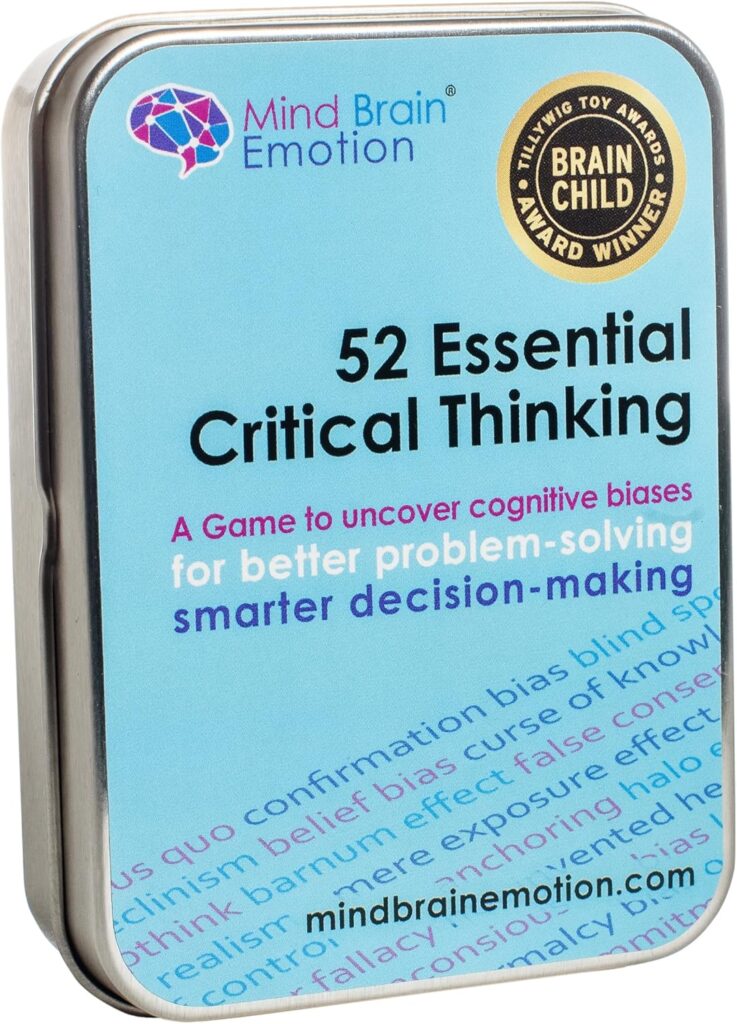
We’ve heard great things about these cards: 52 Essential Critical Thinking: Smart Flash Cards to Uncover Implicit Biases, Detect Cognitive Biases in Social Media, AI, Writing, Speech, Debate, for Teens & Adults – by Harvard Educator
Parenting teens and tweens is hard, but you don’t have to do it alone. These posts may help:
Eating Disorders Are on the Rise: Five Important Things Parents Need to Know
What Parents Need to Know About the Negative Impacts of Teen Ghosting
6 Important Things Teens Need to Know to Take Care of Their Health