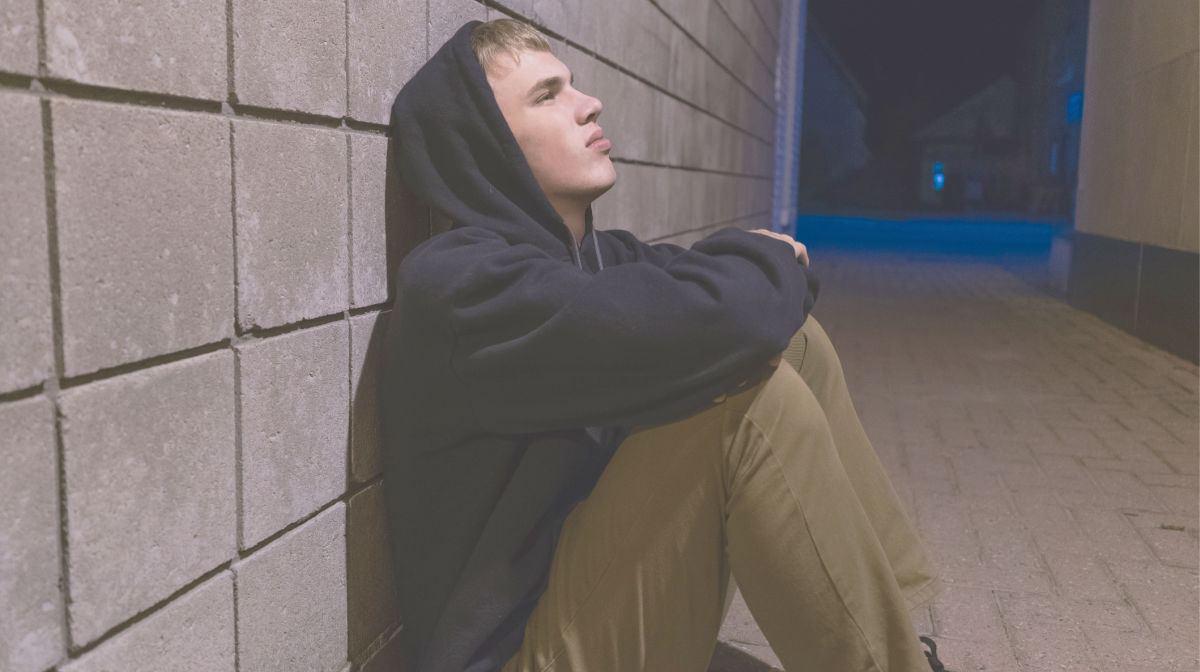


I was shocked and disheartened the day my teen told me that some students at his school yelled queerphobic slurs at him and his friend group in the halls at school. I felt twin flares of rage and helplessness, wishing I could protect him from hatefulness and social rejection.
Unfortunately, peer rejection is a widespread problem and hurtful as a teenager.
These formative teenage years are filled with trying to individualize while also trying to fit in
Asking, “Where do I fit in?” and “Who am I?” are as familiar to teens as breathing.
Finding the answers to these questions feels like safety and security.
But if teens are still searching for their “people” or “group” or “thing” that can give them that safety and security, the next best thing is categorizing everyone else into groups:
Popular or unpopular
Jock or nerd
Queer or Straight
Dumb or smart
Safe or shamed
Fitting in or being on the outside
Related: Dear Teen: Sometimes You Don’t Find Your People in High School
Teen social exclusion can define these formative years
This type of categorizing shows up in our school hallways, TV shows, movies, and video games. Black-and-white thinking—who’s in and who’s out—is a way of creating social protection and a shell of confidence, especially when life can feel inwardly and outwardly chaotic in the midst of rapid teenage development.
But black-and-white thinking and categorizing people into bifurcated groups also creates a dynamic for social exclusion and peer rejection in everyday interactions. Rejection can be used as a weapon or a shield, or both.
I asked my son, “What did you do when the kids at school told you and your queer friends to ‘go to hell’?”
“Oh,” he laughed with dark humor. “We mock them right back.” He repeated some phrases he and his friends yelled in the direction of the other group.
“I see,” I said slowly. “So, when you felt rejected, you rejected them right back?”
My son looked at me, frowning. “No, we didn’t.”
I raised my eyebrows, and a small, wry smile formed on his lip.
“Yeah, I guess we did,” he admitted.
How parents can handle peer rejection and social exclusion
There are two extremes we often go to as humans, in our knee-jerk reaction to push against rejection.
Our first big reaction is to demonize the ones doing the rejecting:
All athletes are jerks!
The theater kids walk around like they own this place!
She is a hateful bully!
Religious people are bigots!
One of the hardest parts of cultivating the social conscience of my teenagers is helping them see beyond the black-and-white thinking. Life is so much more complex than that. People are more complex, so multifaceted, neither this nor that, one nor the other but rather, so many shades of gray.
I don’t want them to deal with peer rejection with more negative thinking and reactions.
Related: Watching My Lonely Teen Navigate High School Breaks My Heart
I asked my son after he told me about the rejection he and his friends experienced at school, “If those kids who said hateful things to you came up and said instead, ‘Hey, could you tell me about your experience? What’s it like to walk in your shoes? Maybe we could have lunch tomorrow,’ Would that feel like acceptance to you?”
His eyes got big. “Yeah, it actually would.”
It’s second nature to reject those who reject us, but to help grow my teen’s empathy, resilience, and graciousness in his world of black-and-white thinking, I have to offer alternative ideas and ways of looking at the world.
By helping him see that the solution to rejection is not simply returning rejection, I hope to help him see the nuances of human interactions, grow beyond snap judgments and reactions, and seek ways to connect instead of reject.
Parents need to continue building their teen’s self-esteem
The second extreme I see my teens going to when they feel rejected is the hardest one to combat: when they feel rejected, they turn inward and reject themselves. Maintaining–and even building–their self-esteem during these issues is critical.
This is heartbreaking to witness as a parent, when peer rejection hits and they say:
If I was faster/stronger/more talented, I would have made the team.
If I were funnier/prettier/thinner/fitter/more popular, then he/she would like me back.
My future is bleak because this college/program/group rejected me.
When my other teenage son told me that his best friend in gym, the girl he’d secretly been crushing on, was now refusing to talk to him, he immediately wondered what he had done wrong.
He wracked his brains for an offense, crafted apologies that pleaded with friends to deliver for him, and wondered over and over again how he could fix her silence, because it must be his fault, right?
As he painted himself as The Problem, The Bad Guy, the one who had to do everything in his power to make things right, my heart sank.
The truth was, he didn’t do anything wrong.
As the weeks progressed and I asked him how it was going with this girl at school, I gently tried to show him that her rejection had nothing to do with him and everything to do with something that was going on with her, a situation that he knew nothing about.
I tried to press the truth into his heart that there was nothing wrong with him as a person or how he had shown up in their friendship. In this situation, when there was no fault to be had, he didn’t have to change who he was to get her to like him or be friends again.
He didn’t need to reject himself in the aftermath of her rejection.
Helping our teens realize that they can accept and belong to themselves after they are rejected by others is a painful, aching path, but one that will ultimately lead to healing and inner strength.
Our job as parents is to empower our teens to be their authentic selves
Brene Brown writes in Braving the Wilderness that “[t]rue belonging is the spiritual practice of believing in and belonging to yourself so deeply that you can share your most authentic self with the world and find sacredness in both being a part of something and standing alone in the wilderness. True belonging doesn’t require you to change who you are; it requires you to be who you are.”
Every day our teens wonder, “Am I accepted?” and “Do I fit in?” while trying to figure out who they are as their bodies, mind, and emotions going through rapid developmental changes.
Related: Heart-Centered Parenting Can Help You Navigate the Tricky Teen Years
Unlike their younger years when we, as parents, could shield them from many uncomfortable experiences, we can no longer protect our teens from the painful reality of peer rejection or social exclusion.
But we can show our teens that there is a tender, beautiful way between turning inward with self-rejection or lashing out and hurting those who reject them.
By guiding them towards self-awareness and reflection, curiosity about what may be going on with those who reject or cause pain, and cultivating true self-belonging, we can help our teens navigate the pain of rejection and find inner hope and healing on the other side.
Are you in the thick of raising your tweens and teens? You may like this book by Whitney Fleming, the owner of Parenting Teens & Tweens: Loving Hard When They’re Hard to Love: Essays about Raising Teens in Today’s Complex, Chaotic World.

Parenting teens and tweens is hard, but you don’t have to do it alone. Here are some posts other parents found useful.
Dear Daughter, I Hope I Loved You Enough to Keep the World from Pushing You Down
The Mental Load of Raising Teens Has Me Running on Empty
Four Ways Parents Can Help Their Teens Have A Positive High School Experience
Why I’m Not Sad High School Is Ending for My Teenager
*This post may contain affiliate links where we earn a small commission for purchases made from our site.