

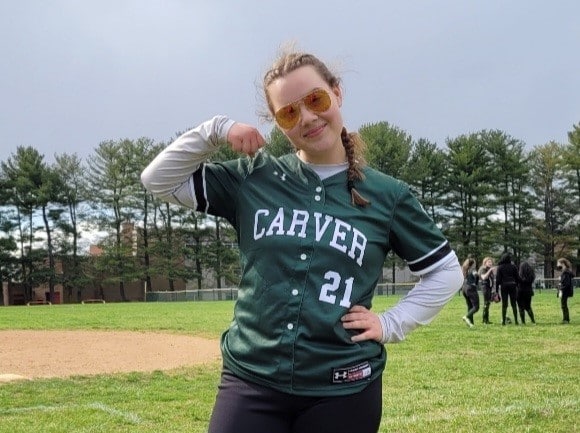
A couple years ago, on the ride home from softball, my daughter and I had a conversation about the difference between “captaining” and “coaching.” She was one of two team captains that year of her high school’s JV softball team and was growing in her discernment of what was hers to do (to encourage and lead by example) and what was not hers to do (coach), all in the larger context of understanding that everyone—she included—was a continuous work in progress.
Teaching Our Kids How to “Captain,” not “Coach” Their Peers
It was in that spirit that we talked about how the prior day’s game had gone and whether she had done more “coaching” or more “captaining.”
She told me about her disappointment in a player who didn’t hustle to the ball, didn’t have a sense of urgency, didn’t run when heading out or back to the field, was quiet on the bench, and didn’t really join the huddle.
“What have you tried?” I asked.
“I’ve tried a couple different approaches, and it doesn’t seem to matter.”
“Hmm,” I pondered aloud. “Sounds like your gut instincts so far haven’t worked. Are you open to trying something different?”
(Insert the sound of crickets.)
“What if you drop the instinct to coach and just look at her as a human having a human experience?”
(The irony of me coaching her to “drop the instinct to coach” is not lost on me, but, alas, we are who we are.)
“What if you were to ask her about her day when you first saw her? Try some active listening and get to know her better.”
“I’ve tried that, and it doesn’t work, Mom.”
“Well, I can tell you, when I am feeling ‘other,’ maybe showing up in the world a bit quiet or introverted, maybe isolating myself from others… If someone were to say, ‘Hey, I notice you’re a bit out of yourself today; what’s going on?’ Wow, I would really appreciate that.
Remember, there’s always a backstory to human behavior, my girl—a reason for someone’s body language, facial expressions, and how they show up in the world. What would it look like to find out her backstory and any possible adversity she’s facing? Maybe see her behavior from a different perspective?”
(More crickets.)
Related: Competitive Youth Sports Means Crazy Schedules But Great Life Lessons
A Million Maybes
“Maybe you’ll learn that this is her first year playing softball and that she feels behind the other players and doesn’t hustle out to the field because she’s nervous she’ll mess up.
Maybe she takes her time when the ball is hit her way because she’s not confident she will know where to throw it and be able to get it there in time.
Maybe she doesn’t hustle from the field to the dugout because she knows it’s almost time for her to hit, and the pressure of striking out is crippling.
Maybe she walks instead of running during the warm-ups because she has always come in last in races, and it’s easier to not try than to try and fail.
Maybe she stands outside the huddle because she feels like an outsider, and locking arms in solidarity feels disingenuous.
Maybe she doesn’t cheer on the bench because she feels she hasn’t earned the right to use her voice, or maybe she doesn’t trust she’ll use the right words at the right time.
The truth is, my girl, I don’t know if any of these ‘maybes’ are true. They could be, they may not be, but you’ll never know unless you ask.”
Related: Dear Coach: Thanks for Helping My Son Grow to Be a Good Man
Many Things Can Be “Equally Possibly True”
Years ago, as I was pursuing training to become a life coach, I learned a storytelling approach grounded in Byron Katie’s The Work that I refer to as “equally possibly true.” I use it frequently to examine my own stories that are creating suffering and find it super useful when helping others do the same.
The framework of the tool is this:
- Our circumstances drive our thoughts
- Our thoughts drive our feelings
- Our feelings drive our behavior
Our brains are wired to make sense of the world around us. To do this efficiently, our brains default to the well-worn neural pathways of our previous experiences, all of which have been informed by our implicit bias, judgment, and beliefs about the world.
When something happens to us (circumstances), our brain synthesizes the experience by pushing it through our filters of cataloged previous experiences—and additional filters of bias, judgment, and our beliefs about the world—and churns out thoughts—or stories—about that experience (stories that, often, are not true). These thoughts (possible false narratives) drive how we feel about and assign meaning to our circumstances. Our feelings then drive our behavior and how we show up in the world.
Here’s how the framework plays out in the example above:
- Circumstances: Teammate seems disengaged, not invested or participatory
- Thoughts: “She should try/work harder. She should listen when people tell her to do things.”
- Feelings: “I’m upset and frustrated that she doesn’t respond to my guidance. When she doesn’t hustle, it impacts the whole team.”
- Behavior: “I’m just going to try all different tones of voice; maybe try having different people communicate the same message. And if that doesn’t work, I don’t know what I’ll do.”
Here’s where the magic of the “equally possibly true” tool comes in:
Instead of attaching to the story that this athlete should just try harder, listen, and do better, we examine it by asking what is equally possibly true about the teammate in that moment. Once we have identified some ‘equally possibly true’ stories, we ask ourselves how our own emotions and behavior towards the teammate would change if those stories were true instead, and then we follow through on that gentler, more informed behavior. The goal is to improve (and, ideally, eliminate) our suffering while simultaneously finding a place of grace for our fellow student athletes.
In the case of my daughter’s teammate, thinking of the teammate’s behavior as aloof caused feelings of frustration, anger, and hopelessness. Viewing that same teammate’s behavior as coming from a place of insecurity or vulnerability shifts the response to one that is empathetic, reassuring, and, ultimately, more productive. In turn, my daughter—the captain—learned the powerful ways she can be a great role model and a true leader to the rest of the team.
Related: How to Encourage Teen Boys to Be More In Touch with Their Emotions
Replacing Judgment with Compassion
On or off the field, with teenagers or adults, it’s an easy leap to see the positive ripple effects that can come from simply getting curious about and having sympathy for the people whose paths cross ours in this deeply connected human experience we call life.
Resisting our brain’s instinctive pull towards its well-worn neural pathways doesn’t happen without intention and practice, but it’s well worth the effort.
Doing so both frees us from the trap of being easily ensnared by untrue judgments about others and ensures that we meet each moment and the people in it as they actually are—which is, after all, exactly what we would want for ourselves.
If you’re looking for more resources and tips to help you through these tumultuous teen years, we recommend Loving Hard When They’re Hard to Love by Whitney Fleming.

Parenting teens and tweens is a tough job, but you’re not alone. Here are some posts that might help:
This Is Why Teen Girls Are So Mean to Their Mothers
50+ Awesome and Inspirational Quotes for Teenagers
These Are the Mistakes I Made That Caused My Daughter to Quit Sports
Five Effective Strategies to Help Reduce Entitled Behavior in Your Teen
*This post may contain affiliate links where we earn a small commission for purchases made from our site.





1oeb0b
g7iuj5