

If you’re on social media, you’ve come across a video. Maybe you’ve watched one, or several. These short-form videos commonly originate from TikTok, YouTube, or Meta platforms (called Facebook or Instagram reels) and are easily shared between platforms. You may have discovered how easy (and tempting) it is to go on to watch the next one queued up, and the next, then looked at the clock. (Oops!) While we know that this is by design (the platforms make money by keeping you engaged), we also realize this may not be the best use of our time. But we still sometimes click, and may be shocked by how much time has passed by the time we step away.
Growing up, many of our parents and grandparents repeatedly said that television was bad for us, that too much screen time would rot our brains. If only they knew that what was coming would be so much worse.

Teens Are Losing Important Life Skills
The 2024 National Assessment of Educational Progress (NAEP), administered by the National Center for Education Statistics (NCES) reported a 10 point drop in twelfth-grade reading skills since 1992. While there are likely multiple reasons for this, many studies show a correlation between heavy consumption of short-form video reduced attention spans and academic performance.
Teens themselves see the relationship. The New York Times interviewed teens across the country, and many of them say that most teens simply read less. They mention as causes not only an addiction to screens, but also the increased use of screens in classrooms and the time demands that come with being a student active in sports or other activities.
After noting a 230 percent increase in usage of the internet slang term, in 2024, Oxford University Press chose “brain rot,” as its word of the year. Their definition: “the supposed deterioration of a person’s mental or intellectual state, especially viewed as the result of overconsumption of material (now particularly online content) considered to be trivial or unchallenging. Also: something characterized as likely to lead to such deterioration.”
While more research needs to be done to establish causation, a September 2025 review of more than 70 studies in Psychological Bulletin found a clear correlation between heavy consumption of short-form video and poor cognitive performance, in particular reduced attention spans and impulse control. To a slightly less, but still concerning degree, this heavy consumption also seems to be linked to increased levels of depression, stress, anxiety, and loneliness.
An October study (focused mostly on TikTok) came to similar conclusions and also found a reduction in academic performance. TikTok is very popular among those aged 18 to 29, and its 135 million US users average 59 to 95 minutes per day watching hundreds of video clips. Researchers found that heavy TikTok users (those who averaged more than two hours a day on the platform) showed reduced attention capacity, both on objective tests and self-assessments. Researchers note that the effects are more pronounced as daily usage increases. These high-volume TikTok users also showed a greater tendency to procrastinate and a lessened ability to engage with complex academic materials.
You may also like to read: New Study Says Parents Worry About the Wrong Screentime Issues
Students who spent 4 or more hours on TikTok per day reported problems with attention difficulties and concentrating on homework. They admitted frequently interrupting study sessions to check TikTok, and found long reading assignments boring. Like the earlier study, correlating neuroimaging studies found alternations in the brain, in this case, the prefrontal executive function and reward-related areas.
What Science is Saying about Short-Form Videos
Short-form videos are highly stimulating and fast-paced, which can lead to habituation, whereby users become desensitized to slower cognitive tasks that require more effort, such as reading and problem-solving. Over time, this process can reduce cognitive endurance, making it difficult for the brain to sustain attention on a single task. At the same time, these videos offer instant rewards, in the form of emotionally-stimulating content that triggers dopamine release. This encourages users to go on to the next video (which is just a swipe away) and creates a reinforcement loop that can be difficult to escape.
The success of the algorithms amplifies the effect by creating a stream of highly stimulating content specifically curated for an individual. At the same time, the constant switching of content matter seems to fragment cognitive processing, reducing the time spent in sustained attention. The fact that these videos are generally watched on mobile devices adds yet another disruptive factor, since the temptation is always there to check to see what is new. This neurobiological conditioning can make it difficult to complete academic and other goal-directed tasks and presents potential difficulty in sustaining mental effort over time, particularly those that require prolonged concentration.
While many of the studies cited relied on self-reported behaviors, some used brain neuroimaging. These tests revealed structural and functional differences in brain regions associated with attention and cognitive control in heavy users. One study found that those who spent more time watching short-form videos had significantly lower markers of prefrontal executive function as well as less self-control.
Why Banning Short-Form Videos May Not Be the Answer
The study authors were careful to point out that we shouldn’t confuse correlation with causation. These studies do indicate major concerns, but more research needs to be done. These platforms are popular and extend into many areas of society. They are used in education, political campaigns, advertising, and consumerism, and are likely not going away any time soon. They also point out that short-form videos are not inherently bad. A 2023 study suggests that, used properly, TikTok can be an effective educational tool. The platform has been shown to increase student enthusiasm and engagement, and also fosters creativity and curiosity. It may also enhance information retention.
6 Steps Parents Can Take if Their Teens Are Watching Too Many Videos
1. Talk about the dangers excessive short-form video exposure poses.
I’ve found that most teens hate to be manipulated. Point out that that’s exactly what these companies are doing. Remind them that the goal is for them to make a profit and their algorithms are designed to keep people on the platform. This is particularly important if you have a teen that shows addictive tendencies since these studies show the negative effects are amplified in those predisposed to addiction.
You may also like to read: TikTok Challenges Are Getting Worse–Here’s How to Talk to Your Kids
2. Set screen limits and periodically insist on breaks.
These studies suggest that structured digital detox periods, along with attention training exercises, may not only mitigate, but also maybe help restore some attentional capacity. Consider using parental controls and time trackers that tell how much time you spend on each app.
3. Plan non-screen-related family activities.
One surprising revelation of the study review was that for users who were already physically active their level of physical activity increased along with their social media use. The converse was also true.
4. Watch for concerning behaviors in your teen.
These studies suggest a potential connection to addictive behaviors. This can explain why some people can easily walk away from these videos while others are constantly tethered to their phones, no matter how many times they’ve lost phone privileges.
5. Know what’s going on in your teens’ schools.
Some have gone “all-in” on technology and are embracing a learning approach that breaks content in to smaller, more digestible segments, mimicking how many teens are consuming information online. Others are focusing on teaching attention management skills and/or instituting technology-free periods during the school day. Make your opinions known to your principal or local school board.
6. Model responsible online behaviors.
This is not the time for “Do as I say, not as I do.” Adults must model healthy screen boundaries. Not sure where to start? Read: 10 Sure-Fire Tricks That Will Make Your Teen Stop Checking Their Phone
It’s important to note that these studies saw little to no difference in attention and cognitive issues between youth and indicated that adults, (even middle-age adults), were at risk.
Looking for an additional resource to help you navigate the teen years?
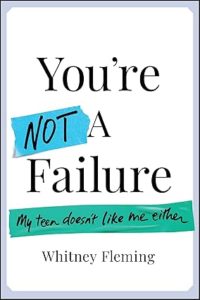
Check out You’re Not a Failure, My Teen’s Don’t Like Me Either by Whitney Fleming. Whitney’s book addresses the many challenges we face as parents today and how we can tackle them to have better relationships with our big kids.
Parenting teens and tweens is a tough job, but you’re not alone. These post might help:
Our Most Popular Easter Basket Gift Ideas For Teens for 2026
Five Parenting Mistakes I Made My Teen’s Freshman Year of High School
No One Talked to Me About Dating When I Was a Teen, So I’m Doing Better for My Daughter
*This post may contain affiliate links where we earn a small commission for purchases made from our site.




Leave a Comment