

The following is a contributed post from By Dan Shapiro, author of Decoding Genius: The Unexpected Lessons of After-School Chess Club.
When my son first started playing chess, I did not think of it as a life skills program. It was just chess.
Like many parents, I was looking for something meaningful for my child to do. Something that would engage his mind, give him confidence, and help him find an activity where his particular strengths made sense. I was not trying to raise a grandmaster. I was not even much of a chess player myself.
But the more I watched my son play, study, lose, improve, compete, and come back to the board again, the more I realized chess was teaching him far more than how to move pieces. It gave him a way to practice skills every teen needs, especially in a world filled with distractions, pressure, and uncertainty.
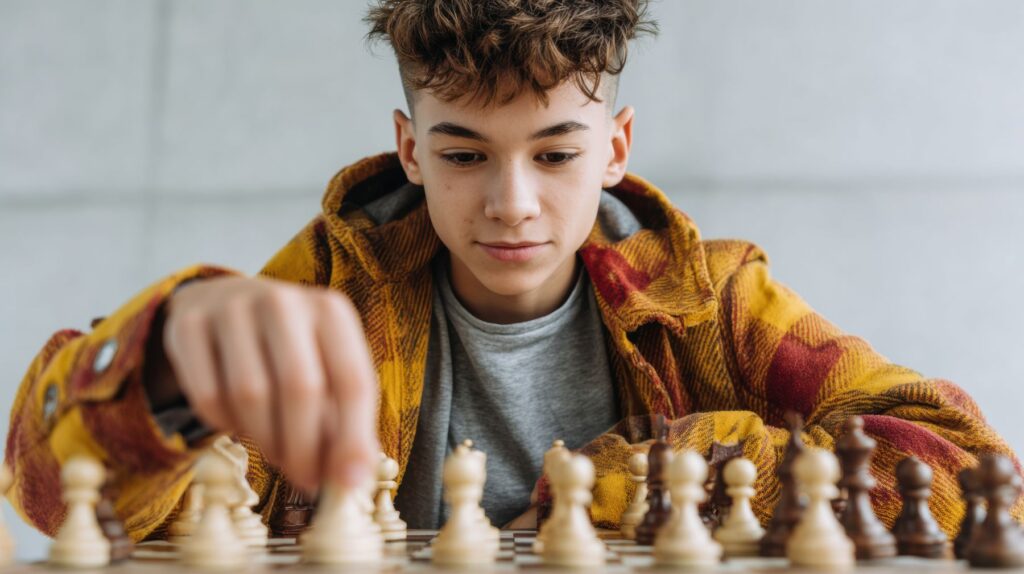
5 Things Playing Chess Will Teach Your Teen
Here are five life skills your teen can gain through chess, whether they become a serious player or simply learn enough to enjoy the game.
1. Focus
We ask for a lot of focus from tweens and teens. We want them to focus in school, focus while doing homework, focus while reading, and focus while listening, all while they are surrounded by phones, notifications, group chats, video games, and an endless stream of entertainment. That is not easy.
One thing I love about chess is that it teaches focus in a way that does not feel like another lecture from an adult. The board itself demands attention. If a player gets distracted, even for a moment, they can miss a threat, lose a piece, or overlook a better move.
For my son, chess became one of the few activities that could fully capture his attention. He liked the game enough to stay with it, and that mattered. It is hard for kids to practice focus on something they find boring. But when they care about the outcome, focus starts to feel less like punishment and more like engagement.
For parents, the lesson is simple: do not introduce chess as “brain training.” Introduce it as a game. Let your teen discover the challenge first. The focus comes naturally from wanting to play better.
You may also like to read: Helping Teens Find their Authentic Self in the Age of Digital Distractions
2. Resilience
Chess is humbling. No matter how good you get, someone can beat you. Sometimes that person is older and more experienced. Sometimes it is a kid half your size who quietly destroys your position while you are still figuring out what went wrong.
That can be frustrating, but it is also one of the best things about the game. Chess teaches kids that losing is not the end of the story. It is information. Every lost game gives a player something to review, something to learn, and something to try differently next time.
I saw this in my own family when my son and I began playing in tournaments. We were both beaten badly in our early events. It was tiring, discouraging, and honestly a little shocking. But we also saw something important: everyone starts somewhere. The players who improve are the ones who come back, study the game, and keep going.
That is resilience in its most practical form. For teens, this is a powerful lesson. A bad grade, a missed opportunity, a rough tryout, or an awkward social moment can feel enormous. Chess gives them repeated practice in losing, recovering, and trying again.
3. Confidence
The best kind of confidence is earned, and chess gives kids a clear way to experience that. They learn a tactic. They remember an opening. They spot a checkmate. They solve a puzzle they could not solve last month. They play someone stronger and last a little longer than they did before. Those small moments build.
One of the most rewarding things I have seen as a parent is the way chess can give a child a sense of agency. They begin to understand that improvement is not magic. It comes from practice, patience, and effort. That is a very different kind of confidence than praise alone can provide.
Teens need places where they can prove to themselves that their effort matters. Chess is excellent for this because progress is visible. You can look back at an old game and see the mistake. You can look at a new game and see that you no longer make it. That realization can travel far beyond the chessboard.
4. Patience
Many young players want to move quickly. They see a piece they can capture and grab it. They see a threat and react immediately. They want action. Chess teaches them to slow down.
Before moving, a player has to ask questions. What will my opponent do next? What am I leaving undefended? Is this move solving the real problem, or just the most obvious problem? Am I taking something because it is smart, or because I am impatient?
These questions are not only useful in chess; they are useful in life as well. For teens, patience is not just about waiting quietly. It is about learning not to act on the first impulse. It is about realizing that the best move is sometimes not the most dramatic move. It is about knowing that a short pause can prevent a bigger problem.
Parents can encourage this by asking simple questions after a casual game: “What did you think would happen next?” or “Was there another move you considered?” The goal is not to quiz them. The goal is to help them notice their own thinking.
You might also like to read: How to Help Teens Build the Life Skills They Need for School-Life Balance
5. Strategic Thinking
People often describe chess as “thinking ahead,” and that is true. But I think the deeper lesson is learning that choices have consequences.
Every move changes the board. A move can create an opportunity, but it can also create a weakness. A player may gain something now and pay for it later. They may have to give up a small advantage to build toward something better. That is real strategy.
Teens are constantly making decisions that have ripple effects: how they spend their time, who they spend it with, how they handle stress, how they respond to conflict, and how they prepare for the future. Chess gives them a safe place to practice decision-making. The stakes are low, but the lessons are real.
Next Move: How Teens Can Get Started
The good news is that your teen does not need to become a tournament player to benefit from chess. In fact, I think the best way to begin is to keep the pressure as low as possible. Let chess be a game first. The deeper lessons come later.
A teen who is brand new to chess can start with a free app or website such as Chess.com or Lichess, both of which offer beginner lessons, puzzles, and computer games. Chess puzzles are especially helpful because they build pattern recognition without requiring a full game. Some teens may also enjoy beginner friendly videos, since many chess teachers explain the game clearly and visually online.
If your child wants something more social, look for a school chess club, a local library program, or a community chess group. Many schools already have clubs, and if they do not, a small group can often be started with a teacher sponsor and a few interested students. Even a simple weekly lunch group or after school meetup with a few boards, a teacher sponsor, and a beginner friendly puzzle of the week can be enough to get started.
Parents do not need to be experts either. Learning alongside your teen can make the experience more fun and less intimidating. The important thing is not to make chess feel like another performance requirement. Some kids will love tournament play. Some will prefer online games. Some will just enjoy casual games at home. Any of those can be worthwhile.
The Endgame for Parents
Your teen does not need to become the next great chess prodigy to gain something valuable from the game. They can gain focus, resilience, confidence, patience, and strategic thinking. Maybe most importantly, they can experience the satisfaction of getting better at something through their own effort.
As a parent, that is what I found most meaningful. Chess gave my son a place to grow. It challenged him, frustrated him, excited him, and helped him see what practice could do.
That is a lesson worth learning at any age.
Read more about the life skills your teen will learn through the game of chess by reading Dan Shapiro’s book Decoding Genius: The Unexpected Lessons of After-School Chess Club.
Parenting teens and tweens is a tough job, but you’re not alone. These posts might help:
Teen Boys Need These 9 Simple Things to Get Through These Tough Years
10 Sure-Fire Tricks That Will Make Your Teen Stop Checking Their Phone
Fostering Resilience and Grit: How to Stop Rescuing Your Kids
Are You Worried Your Teen Has No True Friends? Here’s How to Help.
*This post may contain affiliate links where we earn a small commission for purchases made from our site.