
This is a contributed piece from Dr. Tera Torres of Maximilian Kolbe College.
As your neurodivergent child graduates from high school, expect that the structured system that has supported them for twelve years will begin to disappear. The team: the case manager tracking accommodations, teachers who gave extra time, or the counselor who checks in supporting your teen was there because the schools offered it and the law required it.
The week after graduation, that team is gone.
College disability offices do not come looking for your child. They wait and only help once your child walks in, asks for what they need, and provides documentation. For many neurodivergent young adults, that first step is the hardest thing they have never been asked to practice.
According to the U.S. Bureau of Labor Statistics, only 22.8 percent of Americans with a disability were employed in 2025, compared to 65.2 percent of adults without disabilities. And research from MIT Sloan Management Review found that even among college-educated autistic adults, unemployment can run as high as 85 percent. A degree on the wall does not change those odds. Preparation does. With the right preparation, your neurodivergent teen can learn to stand on their own before the high school safety net is gone.

Five Ways to Support Your Neurodivergent Teen As They Enter Adulthood
1. Script It. Teach them to ask for help before they need it.
Has your child ever had to ask for their own accommodations? Probably not. You advocated for them. Their teacher did. The IEP did the heavy lifting. In college and at work, nobody does that anymore.
Start practicing real sentences at home, at the dinner table, in the car. Things like: “I do better with written instructions. Can you send me a recap after we talk?” or “I need a little extra time on this. Who should I check with?” Make those sentences automatic before the stakes are high.
A study in the American Journal of Speech-Language Pathology found that autistic students rate themselves significantly lower on self-advocacy than peers with other disabilities, and many struggle to recognize when they need help at all. That is a skill gap, not a character flaw. Skill gaps close with practice.
You may also like to read: 10 Things to Know about Attending College With an IEP
2. Hand It Over. Give them a real responsibility with a real deadline.
Executive functioning or the ability to plan, start, and finish things is where most neurodivergent young adults hit a wall in the workforce. Homework does not build that muscle. Real life does.
Pick one thing and hand it over completely. Have them manage the weekly grocery list and budget. Have them schedule and attend their own doctor’s appointments without reminders. Let it be messy. Let them forget something. Let them experience real friction. That friction is the point. A student who has managed a real responsibility for six months walks into adulthood with the lived experience of starting something, getting stuck, and finishing it anyway.
3. Hire a Guide, Not a Gatekeeper. Find work experience that comes with support built in.
The typical internship drops a young adult into an office and expects them to figure out the unwritten rules: when to speak up, how to ask a manager for help, what “urgent” actually means. Nobody teaches that. You are just supposed to know.
What actually works is work experience where a mentor stays involved during the first few months, not just day one. JPMorgan Chase found that when they built exactly that structure into their Autism at Work program, employees made fewer errors and were 48 percent more productive than peers who had been in the same role for three to ten years. The support did not limit performance. It unlocked it.
4. Walk It First. Visit the new environment before it is a big deal.
One of the most common reasons neurodivergent students leave a program in the first month is not the work. Rather, it is an environmental overwhelm that was never anticipated. Unfamiliar lighting, noise, hallway layouts, and social dynamics all cost cognitive bandwidth, and that bill gets paid before a single task is attempted.
Before your teen starts anywhere new, visit on a quiet regular day. Walk the route from the parking lot. Find the bathroom, the quiet corner, the safe person. Elite athletes walk the course before they race it. There is no reason your child should encounter their new environment for the first time on the day everything is already high stakes.
5. Rehearse the Hard Day. Build the reset plan before it is ever needed.
Emotional dysregulation is one of the most common reasons neurodivergent adults lose jobs and leave programs. It derails things badly because nobody practiced what to do before it happened.
Work on this together while things are calm. What does your child do when they feel it starting to build? A three-minute walk outside. A phrase they can say to a coworker: “I just need a few minutes.” Something in their bag that signals a reset. Whatever it is, practice it at home when everything is fine. When a hard day arrives, the response is already there waiting.
You may also like to read: Three Simple Tasks You Should Transition to Your Teens Today
What Preparation Actually Looks Like
None of this requires a clinical degree. It requires being intentional, a little earlier than feels necessary, about handing your child the tools they will need when you are not in the room.
Unemployment among college-educated autistic adults can reach 85 percent. A diploma alone is not the bridge. But the habits built before and alongside the degree are like the scripts practiced at the dinner table, the grocery run without reminders, the work experience with a guide, the building tour, the regulation plan rehearsed before it is ever needed. They all start at home.
For families looking for a post-secondary program built on this same philosophy, Maximilian Kolbe College Career School in Houston was designed around the belief that structured, daily support is what actually makes independence possible, even beyond graduation.
Most colleges were built for students who already know how to navigate large lecture halls, seek out support on their own, and absorb unwritten social rules without anyone spelling them out. MKC was built for students who learn differently and who deserve a program that was actually designed with them in mind, not retrofitted to accommodate them.
At MKC, students learn in small cohorts of 10 to 12 peers. It’s small enough that no one disappears, and every instructor knows exactly where each student is struggling before it becomes a crisis. Learning Therapists are not a resource students have to find and request. They are woven into the weekly schedule from day one, working alongside students on the academic and personal challenges that tend to derail neurodivergent learners before they ever reach the finish line.
Through Kolbe Works, every student holds a paid campus job as part of their program and not as an optional add-on, but as a core part of how MKC prepares graduates for the workforce. Students learn to manage schedules, communicate professionally, work collaboratively, and handle the real friction of showing up and being responsible for something that matters. By the time they graduate, they have a resume of actual paid experience and the confidence of someone who has already proven they can handle the job.
That is what the five steps above are building toward. Not just a student who survives the transition but one who is ready for it.
This piece was written by Dr. Tera Torres, the founder of Maximilian Kolbe College, an innovative institution in Houston dedicated to supporting neurodivergent and nontraditional learners. She has more than 25 years of experience in special education and higher education and is a passionate advocate for inclusive learning.
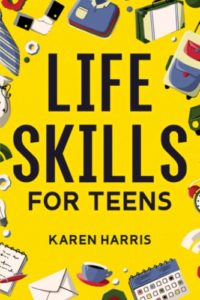
For an additional resource on teaching your teen essential life skills as they enter adulthood, we recommend Life Skills for Teens: How to Cook, Clean, Manage Money, Fix Your Car, Perform First Aid, and Just About Everything in Between by Karen Harris.
Parenting teens and tweens is a tough job, but you’re not alone. These posts might help:
The Best Documentaries To Watch With Your Teens and Tweens
The Boy, The Mole, The Fox & The Horse Book Is The Perfect Graduation Gift
Twenty of the Best Audio Books For Teens (That Parents Will Enjoy Too!)
This Is Why Teen Girls Are So Mean to Their Mothers
*This post may contain affiliate links where we earn a small commission for purchases made from our site.