


With one child entering his last year of middle school and another starting this fall, I am in the thick of what is considered one of the most challenging times for parents. Before my oldest entered middle school, I thought I understood what to expect. I attended the orientations, spoke with parents of older children, and relied on my own recollection of my middle school experience.
Related: Middle School, The Hardest Years of Your Life As A Mom (So Far)
Once my child began his middle school career, I learned my expectations and knowledge fell a bit short. My son starting middle school was a trial by fire, with myself and my husband quickly discovering there were many things we needed to pick up to ensure our son was able to thrive in this new environment.
Every child is different, and my youngest’s foray into middle school may reveal new challenges. Still, I am more confident about my ability to navigate this experience thanks to discovering these realities about middle school.
Five Realities of Middle School, and the Mistakes Some Parents Make
1. Expect Less Communication from Teachers
When my son was in elementary school, I probably communicated more with his teachers than I did my own parents. Between the constant Remind app notifications, emails and flyers sent home half-crumpled in his backpack, I was inundated with reminders about everything from class projects to field trips. And that’s not included notices sent from the principal, PTA and other school-related groups.
Once my son began middle school, I was nervous when I heard nothing from my son’s teachers. Turns out, no news was good news in my case, and the parents who did hear from the teachers were those whose kids were struggling to get their assignments in on time.
This scaling back of communication is a good way for parents to begin empowering tweens to develop the self-discipline and organizational skills needed to monitor their assignments and prepare for exams.
Mistake to avoid: Teachers want to get to know you and don’t mind questions but try to give your student a chance first before stepping in to solve it. Teaching your child how to advocate is an important skill and also gives your middle schooler a chance to build executive functioning. You may also like to read: 9 Ways Parents Can Help Their Child Build Executive Function in Middle School
2. Friend Dynamics Will Change
Depending on the size and structure of your school district, middle school is often where children from various elementary schools come together. Children who were used to being with the same set of peers throughout elementary school now have the opportunity to meet new friends.
Even if the students change little from elementary, middle school friendships still change. Your child may no longer feel connected with a childhood bestie and may begin gravitating toward new groups. Their interests may change, or they may be responding to incidents you know nothing about, such as drama or toxic behavior.
This can be challenging for parents who may have developed close bonds with other parents via their children’s friendships. I remind myself that even if our kids are no longer close, it doesn’t mean I can’t maintain my own adult relationships, while respecting appropriate boundaries.
Mistakes to avoid: Try not to get overly involved and mettle in your child’s friendship. Discussion and general questions are fine, but middle school is a great time to let your child take the lead. You may like to read: 7 Ways To Help Your Child More Easily Transition To Middle School
3. Activities Really Start To Pickup
I may be the exception to the rule when I say I had a very strict policy of limiting my children’s activities when they were little. I was happy to have a few afternoons/evenings per week without a single thing on our schedule. Once, my oldest began middle school, I found those free days filling up fast.
Along with the usual array of activities taking place outside of the school, many middle schools offer a variety of afterschool clubs from modified sports to drama. If you have a child who wants to do all the things, you will be amazed at how quickly their afterschool schedule can fill up.
For my own sanity and the well-being of my oldest, I felt it was important to give him the tools to make wise choices about how much he wanted to do. He has learned to prioritize the activities he really enjoys and understands trying to do it all isn’t healthy.
Mistake to avoid: Overscheduling can be a challenge, and it starts in middle school. Now is a great time to start a family calendar so each member sees exactly what activities they have and when. Go over it each week, and allot specific slots for family time, studying, and self-care/play, etc. This can help provide a foundation at your teen gets busier.
4. Kids won’t want to talk to you, except when they do
The way my oldest barely responds to the question, “How was your day?” you’d think he was a spy doing his best not to blow a government secret. Even my attempts to garner answers using specific questions like, “How was your social studies test?” often gets met with a few one-word grunts.
Later the same day, I will be focused on my own tasks, when my son will start talking to me about Fortnite. I learned to respect that while gaming is not at all my passion, this happens to be one of the many things my son enjoys, and I know he values when I sit and really listen to him when he shares this interest with me. I can tell he appreciates my general awareness of the topic and my willingness to learn more. We have to take the opportunity to have conversations with our teens however we get to have them.
Mistake to avoid: Try not to take this type of behavior personally. There is a lot going on in your tween/teen’s brain during this time, and their communication skills are not developed. The best advice is to just stay available to your adolescent and meet them on their terms. You may want to read: Raising Teens Means Always Staying Available for a Part-time Job
5. (Seemingly) Little Things Will Become Huge Deals
Like many parents, the toddler years hit our home hard. I felt much of my day was spent trying to avoid or deal with a meltdown. As with most children, my son grew out of this stage, and while we still had an occasional tantrum, we thought we were clear of those early days when we never knew when our kid might explode.
Now that he has entered adolescence, we are seeing some of these big feelings again. While I wouldn’t say they are a repeat of the toddler years, I often feel that same sense of helplessness because I can’t reason with my middle school kid.
Related: Five Critical Tips to Defuse an Emotional Teen
The difference now is both myself and my son have had the years to learn effective coping strategies. I have also grown as a parent, and now do my best to avoid the temptation to swoop in and handle the situation. I realize that the benefits of securing temporary bliss in the home is not worth hindering my son’s chance to learn to fight his own battles. Of course, their will be cases where my son is unable or should not take on certain challenges, and in those times, I strive to assure him that I have his back.
Mistake to avoid: Try to hold off on labeling your son or daughter as “dramatic” or “irrational.” We have to remember that their feelings are big but their perspectives are small, so let them feel the feel (within reason.) We subscribe to the theory that our adolescents are allowed to have all their feelings, but they don’t get to have all the behaviors. They need to learn to keep disrespectful behavior in check. You may like to read: 5 Must-Have Phrases Every Parent of Teens Needs to Shut Arguments Down
Looking for more resources on middle school parenting?
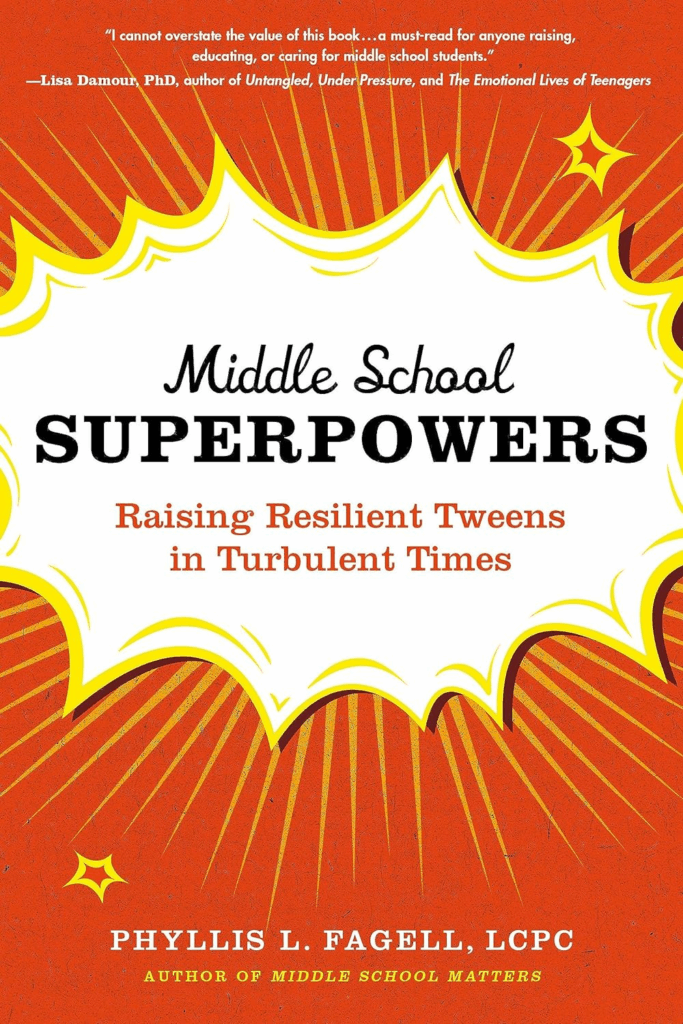
Check out this book Middle School Superpowers: Raising Resilient Tweens in Turbulent Times
Parenting teens and tweens is hard, but these articles may help:
Group Texts Are the Worst for Parents of Middle Schoolers
15 Positive Affirmations To Say With Your Middle Schooler
7 Lessons Middle School Athletes Learn through Sports (And None Are About Winning)
The One Phrase You Need to Help Your Child Succeed in Middle School





Leave a Comment