

Inside: Instead of parents pushing teens to open up more, they need to focus on building emotional transparency and safety for a long-term relationship.

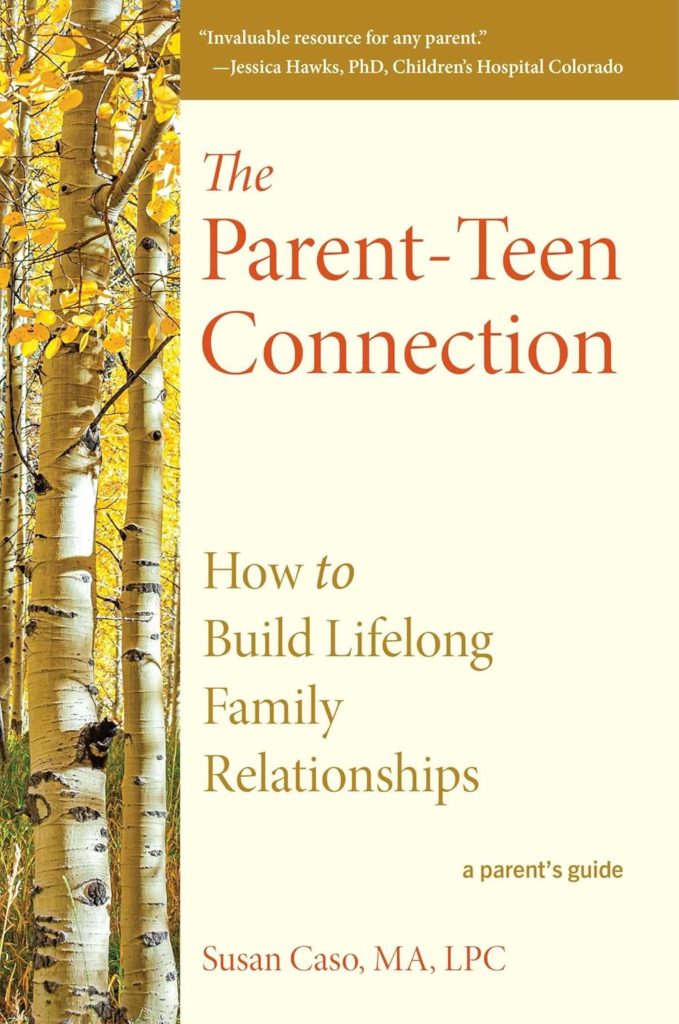
This is a contributed post by Susan Caso, MA, LPC, and author of The Parent-Teen Connection: How to Build Lifelong Family Relationships.
Note: Parenting Teens and Tweens posts contain affiliate links where we may earn a small commission for products or services purchased on our site.
As a therapist and a parent of three, I’ve spent more than 20 years helping families navigate the emotional complexities of raising teenagers. One thing has become undeniably clear: adolescence today is far more demanding than it was a generation ago.
Teens are growing up in a pressure cooker of academic expectations, rigorous sports, overscheduled lives, and an always-on digital world. Social media provides adolescents with a constant stream of curated images and comparisons that erode self-worth. Meanwhile, rates of anxiety, depression, and even suicidal ideation continue to rise. Beneath it all, teenagers are doing the hard work of identity formation—asking, Who am I? and Do I belong?
In this landscape, what young people need most from home is not more pressure to perform—or even to open up in ways that feel risky. What they need is emotional safety: a foundation of trust and connection that makes self-expression feel not just possible, but natural.
Related: This Powerful Parenting Mindshift Can Transform Your Teen’s Attitude
The Vulnerability Trap
The prevailing wisdom today suggests that vulnerability is the key to intimacy and closeness. Social media influencers, therapists, and bestsellers all praise the power of being open, raw, and exposed. And yes, there’s value in that. But for teenagers—who are already navigating fragile self-esteem and complex emotions—the push to “be vulnerable” can sometimes backfire.
That’s because vulnerability implies risk. For teens, sharing something personal with a parent might feel like walking a tightrope: Will I be judged? Will I disappoint them? Will I be misunderstood? When we frame emotional sharing as inherently risky, we may unintentionally discourage it.
Related: 8 Effective Ways to Get Your Teen Son to Open Up to You
Instead of emphasizing vulnerability, I believe we should promote emotional transparency.
What Is Emotional Transparency?
Emotional transparency is grounded in trust, not risk. It’s the ability to express what’s happening inside—your thoughts, feelings, fears, needs, and hopes—without bracing for impact. In a transparent relationship, teens don’t worry they’ll be met with judgment or dismissal. They know they’ll be met with empathy and curiosity.
Transparency allows for emotional honesty without emotional exposure. It doesn’t ask teens to be brave—it helps them feel safe enough not to need to be.
How to Build an Emotional Transparent Relationship
Creating this kind of emotional climate at home with your adolescent children doesn’t require dramatic conversations or constant confessions. It’s about shaping an environment where teens feel accepted as they are—where no part of them needs to be hidden. It starts with the everyday tone of your relationship. Teens need to feel that their inner world is welcome, not just tolerated but met with curiosity and care.
Here’s how parents can create that foundation:
- Listen without interrupting or correcting. Let your teen finish their thoughts before responding, even if it’s hard to hear or you disagree. (Read: The Best Way To Have An Actual Conversation With Your Teen)
- Validate their emotions. You don’t have to fully understand their perspective to affirm that their feelings are real and valid.
- Avoid knee-jerk problem-solving. Like all of us, teens want to be heard, not fixed.
- Model openness. Share your own thoughts and feelings in age-appropriate ways to normalize emotional honesty.
- Welcome difficult topics. Stay calm and grounded, even when the conversation is uncomfortable or unexpected. (Read: This is What I Share with My Teenagers About My Wild High School Years)
- Create a sense of belonging at home. Make your teen feel seen, valued, and accepted—not just for what they do, but for who they are.
- Focus on the relationship. Nurture connection over correction. Let your daily interactions reflect that the relationship matters more than any task or disagreement.
When teens experience this kind of safety consistently, trust builds. That trust leads to openness, which leads to emotional closeness. And that closeness becomes a protective buffer against life’s many challenges.
The “Volley” That Builds Connection with Your Teen
Think back to when your child was an infant. You bonded through a series of simple, responsive interactions: they cried, you soothed; they reached out, you held them. That responsive rhythm made them feel safe.
Teenagers need that same rhythm—just in a new form. I call it “volleying.” Your teen serves up a thought, a feeling, a hesitation—and you respond with listening and acknowledgement of their position. They test the waters with something uncomfortable—and you show you can return with a calm presence. This back-and-forth creates emotional safety. Over time, what once felt vulnerable becomes routine. Sharing becomes a well-worn path, not a leap of faith.
Transitioning from Vulnerability to Emotion Transparency
Ultimately, emotional safety is not about urging teens to be brave enough to reveal themselves. It’s about cultivating a relationship where they no longer have to be. When home feels like a place where nothing is too much, too hard, or too wrong to talk about, teens don’t retreat—they lean in.
That doesn’t mean every emotion must be expressed or every problem disclosed. But it does mean your teen knows: There’s nothing I can’t say here. There’s nothing that will make you love me less.
And that’s what makes the difference—not just in the moment, but for life.
Related: These Simple Questions Helped Me Stop Reacting to My Son’s Big Emotions
If we want to raise emotionally healthy and resilient teens, it may be time to reconsider the objective. The aim isn’t to coax vulnerability on demand—it’s to cultivate an environment where transparency feels natural. That means fostering a family culture in which authenticity is the norm and safety is a given.
So the next time your teenager hesitates to open up, ask yourself: Have I built the kind of space where honesty feels safe? Then, through calm words and consistent actions, show them you’re ready to listen—without judgment, without fixing. You’re present. You’re steady. And you can handle the hard stuff. Conversation, like trust, is a long game. Be prepared to return the serve.
Want to read more from this author?
Check out her new book, The Parent-Teen Connection: How to Build Lifelong Family Relationships.
Parenting teens and tweens is hard, but you don’t have to do it alone. These posts may help:
This Is How to Handle Teen School Refusal
Here Are 20 Easy and Healthy Coping Skills for Teens
Seven Simple Consequences for Teens to Help with Discipline
This Powerful Parenting Mindshift Can Transform Your Teen’s Attitude